

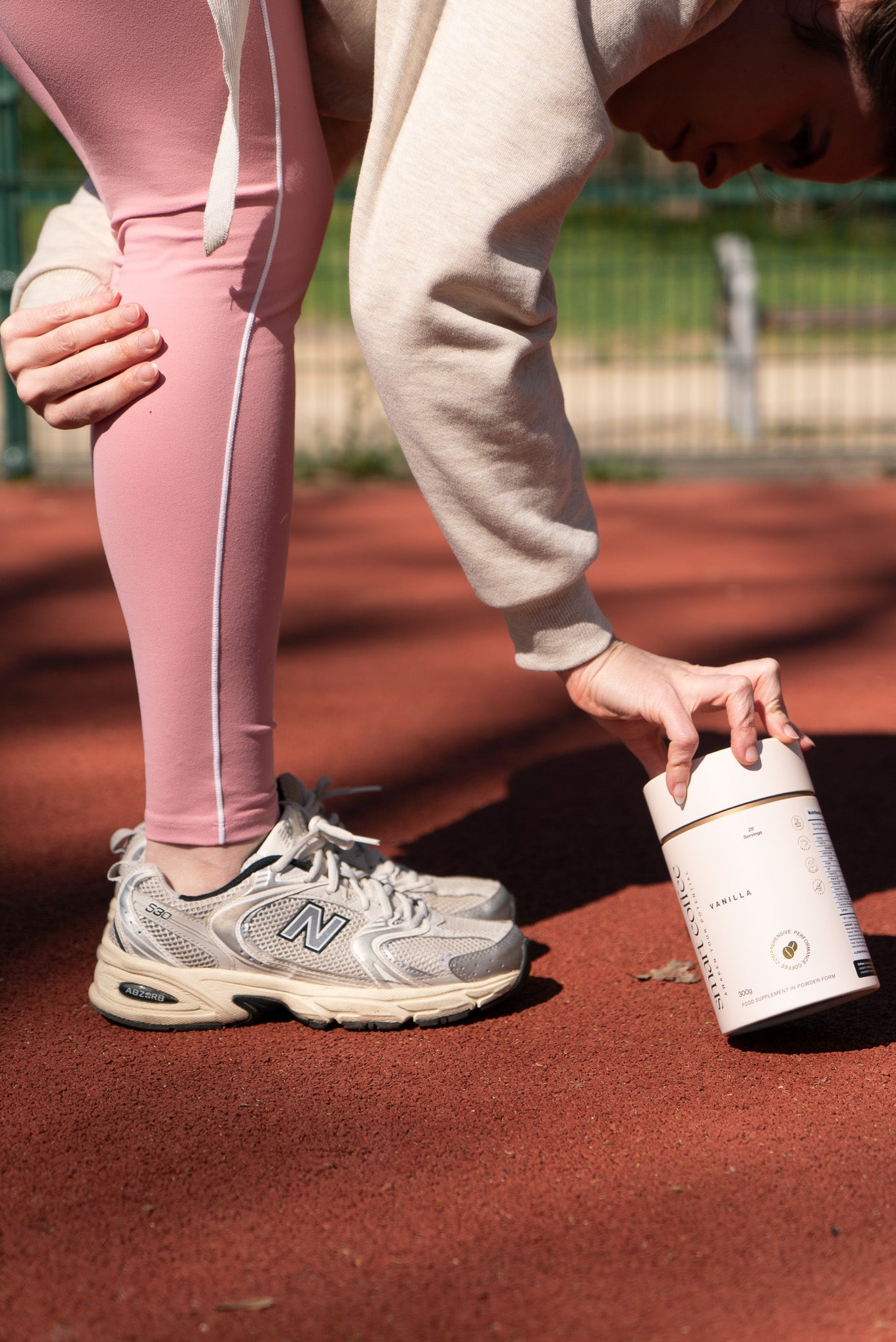
Yes — the right cup of coffee can actively support physical recovery after exercise. Caffeine alone stimulates the body, but functional ingredients like magnesium, collagen, MCT oil, L-theanine, and methylated B-complex work at a cellular level to reduce inflammation, rebuild muscle tissue, restore energy production, and regulate the cortisol spike that intense exercise creates. The key is knowing what your body needs after effort — and making sure your coffee is delivering it.
What Actually Happens to Your Body After Intense Exercise
Most people think recovery is passive. You stop moving, you rest, and the body fixes itself.
The reality is more complex — and more demanding.
Every training session, every long run, every heavy lift creates a cascade of biological events that the body has to actively manage. Muscle fibers tear microscopically and need to be rebuilt. Glycogen stores are depleted and need to be replenished. Cortisol — the stress hormone released during exercise — needs to come back down. Inflammation rises as part of the repair process and needs to be regulated. Mitochondria — your cellular energy factories — need raw materials to restore their output.
This is recovery. And it requires specific nutrients to happen efficiently.
When those nutrients aren't available, recovery slows. Soreness lasts longer. Energy takes days to return. Performance in the next session suffers. And over time, the cumulative effect of under-recovered training leads to fatigue, injury, and the kind of exhaustion that doesn't go away with rest alone.
The body is incredibly sophisticated at signaling what it needs. The problem is that most of us aren't listening — or we're listening to the wrong signals. We feel tired, so we assume we need more sleep. We feel sore, so we assume we need more rest. But often, what we actually need is the right nutrients, delivered at the right time, in forms our body can actually use.
The Nutrients Your Body Demands Most After Physical Effort
Magnesium: The Recovery Mineral You're Definitely Depleting
Magnesium is the first nutrient depleted by intense exercise. It's lost through sweat, consumed by muscle contraction, and burned through the cortisol response that training triggers. Without adequate magnesium, muscles stay in a state of tension — leading to cramping, delayed soreness, and poor sleep quality that prevents the deep recovery that happens overnight.
Magnesium also directly regulates cortisol, which means its depletion creates a cycle: exercise raises cortisol, cortisol depletes magnesium, low magnesium keeps cortisol elevated, elevated cortisol prevents recovery. It's a vicious loop that most athletes don't even realize they're caught in.
The form of magnesium matters enormously. Magnesium bisglycinate is highly bioavailable, meaning your body can actually absorb and use it — unlike the magnesium oxide found in most supplements, which passes through your system largely unused.
Collagen: The Structural Protein Your Connective Tissue Needs
Collagen is the structural protein your body uses to repair connective tissue — tendons, ligaments, cartilage, and the extracellular matrix surrounding muscle fibers. After intense exercise, collagen synthesis increases as the body attempts to repair and reinforce the structures under load.
Without adequate collagen — or its precursor amino acids — this repair process is slower and less complete, increasing injury risk and prolonging recovery time. This is why athletes who supplement with collagen report less joint pain, faster recovery from tendon injuries, and improved resilience in the tissues that take the most beating during training.
The science here is solid. Multiple studies show that hydrolyzed collagen (the form that's actually absorbable) supports connective tissue repair, reduces exercise-induced joint pain, and improves structural integrity over time.
MCT Oil: Fast, Clean Energy Without the Crash
MCT oil provides a fast, clean source of energy that bypasses the blood sugar fluctuations that slow recovery. After exercise, the brain and muscles are competing for fuel. MCTs convert directly into ketones — an alternative fuel source that the brain uses immediately, without insulin, without the glucose crash that typically follows intense effort.
This means clearer thinking, faster return of mental energy, and a more stable hormonal environment for recovery. Instead of the post-workout energy crash that most people experience — that fog that makes the afternoon feel impossible — MCT oil provides sustained mental clarity and physical energy.
The C8 and C10 forms are the most bioavailable, converting to ketones faster than longer-chain MCTs. This matters when you're trying to restore energy quickly and efficiently.
Methylated B-Complex: The Cellular Energy Foundation
Methylated B-complex sits at the center of cellular energy production. B vitamins are essential cofactors for the mitochondrial processes that generate ATP — the energy currency of every cell in your body. After intense exercise, mitochondrial demand is at its highest.
Without adequate B vitamins in their bioavailable, methylated form, this process is inefficient — and fatigue lingers far longer than it should. The methylated forms (like methylcobalamin instead of cyanocobalamin) are what your body actually uses, without requiring additional conversion steps that many people's genetics make difficult or impossible.
This is why athletes who optimize their B vitamin status report faster energy recovery, better mental focus, and less post-workout fatigue.
L-Theanine: The Nervous System Recovery Tool
L-theanine addresses something most post-exercise recovery plans completely ignore: the nervous system. Intense physical effort activates the sympathetic nervous system — the fight-or-flight response — and elevates cortisol significantly.
L-theanine promotes parasympathetic activation, the rest-and-digest state where recovery actually happens. It reduces cortisol without sedating, calms neural activity without impairing function, and when combined with caffeine, creates a state of focused calm that supports both mental and physical restoration.
This is why functional coffee with L-theanine feels different from regular coffee. You get the mental clarity and energy boost of caffeine, but without the jitteriness or the anxiety spike that caffeine alone can create.
Why Most Post-Workout Routines Miss the Point
The supplement industry has conditioned athletes and fitness enthusiasts to think about recovery in terms of protein shakes and BCAAs. And while protein is essential, it's only one piece of a much more complex puzzle.
The nervous system recovery — bringing cortisol down, activating parasympathetic function, restoring sleep quality — is almost never addressed. The micronutrient depletion that happens during exercise — magnesium, B vitamins, electrolytes — is rarely replaced adequately. The cognitive fatigue that follows intense training — the brain fog, the low motivation, the difficulty concentrating — is treated as inevitable rather than addressable.
It isn't inevitable. It's a nutrient gap. And it can be closed.
Most recovery protocols focus on what happens in the immediate post-workout window. But recovery is a 24-hour process. What you do the morning after your workout — and every morning, consistently — has as much impact on how well you recover as what you do immediately after training.
The Morning Ritual That Supports Recovery
Recovery isn't just what you do immediately after exercise. It's what you do consistently — every day, in the choices that build or deplete your body's capacity to repair and adapt.
The morning is the highest-leverage moment in that daily architecture. It's when cortisol is naturally at its peak, when the nervous system is transitioning from rest to activity, and when the nutrients you consume have the greatest impact on how your body performs and recovers for the rest of the day.
A morning ritual built on functional nutrition — rather than just caffeine — sets the biological conditions for recovery to happen efficiently throughout the day. Instead of starting your day with a cortisol spike and a nutrient deficit, you're starting with the exact nutrients your body needs to repair, restore, and prepare for the next training session.
This is why the timing matters. A functional coffee in the morning isn't just about waking up. It's about setting your body up to recover well from yesterday's training while preparing for today's demands.
How Smart Coffee Supports Physical Recovery
That's why magnesium, collagen, MCT oil, methylated B-complex, and L-theanine are in every serving of Smart Coffee — in the forms your body actually absorbs.
Not as a replacement for recovery nutrition. As the daily foundation that makes everything else work better.
One cup. Every morning. The nutrients your body needs to repair, restore, and come back stronger — delivered at the moment they have the greatest impact.
Because recovery isn't just what happens after the workout. It's what you build every single day before the next one.
FAQ
Can coffee help with muscle recovery after exercise?
Regular coffee provides caffeine, which can reduce perceived muscle soreness after exercise. But functional coffee — with added magnesium, collagen, L-theanine, and B vitamins — goes significantly further, addressing the hormonal, cellular, and structural aspects of recovery that caffeine alone cannot reach.
What is the best time to drink coffee for post-workout recovery?
The most effective window is within 60 to 90 minutes after exercise, once the acute cortisol response has begun to decline. Drinking functional coffee at this point supports cortisol regulation, provides cellular energy via MCT oil, and delivers the micronutrients needed for muscle and tissue repair. However, a consistent morning ritual with functional coffee provides ongoing support for recovery throughout the day.
Does L-theanine help with exercise recovery?
Yes — L-theanine supports recovery by promoting parasympathetic nervous system activation, which is the physiological state where tissue repair, hormone regulation, and sleep quality are optimized. It also reduces the anxiety and neural hyperactivation that intense training can create.
Is collagen effective for muscle and joint recovery?
Research consistently shows that collagen supplementation supports connective tissue repair, reduces joint pain associated with exercise, and improves the structural integrity of tendons and ligaments over time. Its effectiveness is enhanced when consumed alongside vitamin C and in hydrolyzed form, which improves absorption.
What does MCT oil do for post-exercise energy?
MCT oil converts rapidly into ketones — an alternative brain fuel that doesn't depend on blood sugar or insulin. After intense exercise, when glucose is depleted and blood sugar is fluctuating, MCTs provide immediate, stable cognitive energy that supports mental clarity and reduces post-workout brain fog.
How long does it take to notice recovery improvements?
Most people notice improvements in energy levels, mental clarity, and reduced soreness within 3 to 5 days of consistent use. More significant changes in sleep quality, joint comfort, and overall recovery capacity typically become apparent within 2 to 3 weeks as nutrient stores rebuild and the nervous system recalibrates.
Smart Coffee was formulated based on the biochemistry of physical effort and recovery — for those who train with intention and understand that what you put in your body every morning determines how well it rebuilds.



Partager: