


Yes — B12 supplementation works, but only when the right form is paired with the right cofactors. Methylcobalamin is the superior form — your body uses it directly, without conversion. But here's what most B12 supplements never tell you: methylcobalamin's superiority only matters if the nutrient environment around it supports it. B12 doesn't work in isolation. It never has. And understanding why is the difference between a supplement that changes nothing and one that actually works.
The form question — and why it's only half the answer
Most conversations about B12 start and end with the form debate: methylcobalamin versus cyanocobalamin.
Molecularly, methylcobalamin wins. It's the bioactive form your body uses directly in two critical enzymatic pathways. Cyanocobalamin requires liver conversion via a specific enzyme — and roughly 5 to 10% of the population has genetic variants that impair this conversion. COMT polymorphisms, poor methylation capacity, slow converters due to age or liver stress — for these individuals, cyanocobalamin supplementation produces minimal benefit regardless of dose.
But here's what gets missed entirely: methylcobalamin's superiority only matters if the cofactor environment supports its utilization.
This is where the clinical picture changes everything.
Absorption versus utilization — the distinction most supplements ignore
B12 participates in folate metabolism. Specifically, it works with methylfolate — not folic acid — to convert homocysteine to methionine. If folate status is suboptimal — which is common, especially in women on hormonal contraceptives or those with MTHFR variants — the body can absorb perfect methylcobalamin and still fail to utilize it effectively.
This pattern appears consistently in clinical practice. A patient with fatigue presents with low B12. Methylcobalamin is supplemented. Three months later — minimal improvement. Folate status is tested. It's inadequate. Both are addressed together, and the transformation is dramatic.
B12 in isolation was never going to work.
Liquid supplements bypass absorption barriers — meaningful for pernicious anemia or digestive dysfunction. But absorption is meaningless without utilization. The body can absorb methylcobalamin perfectly and still fail to convert it to active forms without adequate B6, B2, and methylfolate.
The missing piece in most B12 marketing is the assumption that absorption is the barrier. Often, it's utilization. The gut absorbs B12 fine. The body struggles to use it.
Why energy production requires more than B12
B12 supports energy through the methylmalonyl-CoA mutase pathway — a critical citric acid cycle step. But this pathway requires B12, B1, B2, B3, B5, B6, magnesium, iron, and copper working in coordination.
Remove magnesium and the mitochondria cannot process the energy B12 helps create. Remove iron and cells cannot carry oxygen efficiently. Remove B6 and heme synthesis for red blood cells is impaired.
Isolated B12 deficiency is rare in clinical practice. It's almost always part of a broader nutrient gap. A woman with heavy menstrual bleeding presents with low B12, low iron, and low folate simultaneously. Supplementing B12 alone treats the symptom — not the system.
This is why repeat purchase rates for standalone B12 supplements are so low. The product isn't failing. The approach is.
Who genuinely needs B12 supplementation — and in what form
Those with pernicious anemia — they lack intrinsic factor. Liquid or sublingual forms help, but injections are often essential.
Those with gut dysbiosis — absorption is compromised across multiple nutrients. B12 helps, but gut healing matters equally.
Those with MTHFR or COMT variants — they benefit specifically from methylcobalamin, but only within a broader nutrient context that includes methylfolate, B6, and B2.
Women on hormonal contraceptives — oral contraceptives deplete B6, B12, folate, and magnesium simultaneously. Addressing B12 alone in this population consistently underdelivers.
Anyone under chronic stress — cortisol depletes B vitamins continuously. The depletion is systemic, not isolated, which is why systemic replacement is required.
The architectural challenge — fitting a nutrient system into a single delivery vehicle
The engineering challenge isn't finding the best B12. It's building the environment in which B12 can actually function.
Methylcobalamin paired with methylfolate, B6, and B2 — the cofactors it needs for the homocysteine-to-methionine conversion that underlies energy metabolism, neurological function, and mood regulation. Magnesium bisglycinate for mineral cofactor status and mitochondrial energy production — in the bioavailable chelated form that bypasses mineral competition. Choline to support neurotransmitter synthesis and methylation cycles. Each ingredient chosen not because it's individually impressive, but because it supports the function of everything around it.
This is nutrient systems thinking. And it's the opposite of how most supplements are formulated.
FAQ
What is the difference between methylcobalamin and cyanocobalamin? Methylcobalamin is the bioactive form of B12 — your body uses it directly without conversion. Cyanocobalamin requires liver conversion via specific enzymes, and a significant portion of the population has genetic variants that impair this conversion. For anyone with MTHFR or COMT polymorphisms, cyanocobalamin supplementation may produce minimal benefit regardless of dose.
Why doesn't B12 supplementation always improve energy levels? Because energy production requires B12 to work alongside B1, B2, B3, B5, B6, magnesium, iron, and copper in a coordinated enzymatic process. Supplementing B12 alone addresses one component of a multi-nutrient system — which is why isolated B12 supplementation consistently underdelivers in clinical practice.
Can I be B12 deficient even if I eat a balanced diet? Yes — particularly if you have gut dysbiosis, MTHFR variants, are on hormonal contraceptives, or are under chronic stress. All of these conditions impair either the absorption or utilization of B12 independently of dietary intake.
What is the MTHFR gene and why does it matter for B12? MTHFR encodes an enzyme involved in folate metabolism — which directly affects B12 utilization. A variant in this gene impairs the conversion of folic acid to methylfolate, reducing the body's ability to use B12 effectively even when absorption is adequate. Methylfolate supplementation alongside methylcobalamin bypasses this conversion.
Why does Smart Coffee use methylcobalamin instead of cyanocobalamin? Because methylcobalamin is the form the body uses directly — no conversion required, no genetic barrier. Combined with its essential cofactors in a single daily serving, it supports the complete nutrient system that B12 function depends on — not just the isolated molecule.
How Smart Coffee was built around this principle
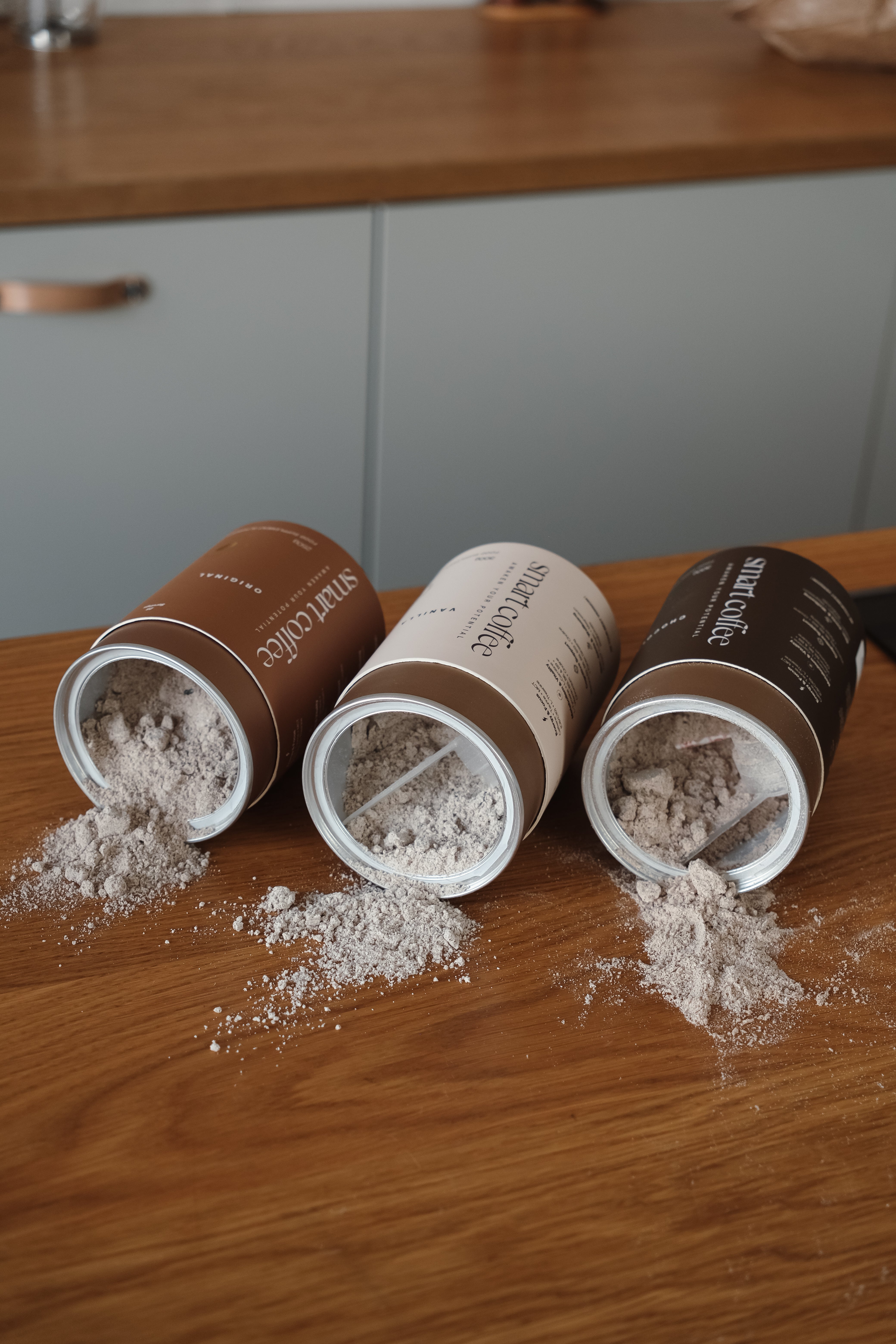
That's why Smart Coffee contains methylcobalamin — not cyanocobalamin — paired with methylfolate, B6, B2, magnesium bisglycinate, and choline, alongside 11 other active ingredients engineered to work together as the body actually needs them.
Not a B12 product. Not a magnesium product. A functional coffee formulated around nutrient systems — where each ingredient supports the absorption and utilization of everything else in the formula.
Traditional supplementation treats each gap separately. Smart Coffee was built to address the system.
One cup. Every morning. The nutrient environment your body has been waiting for.


Aktie: