

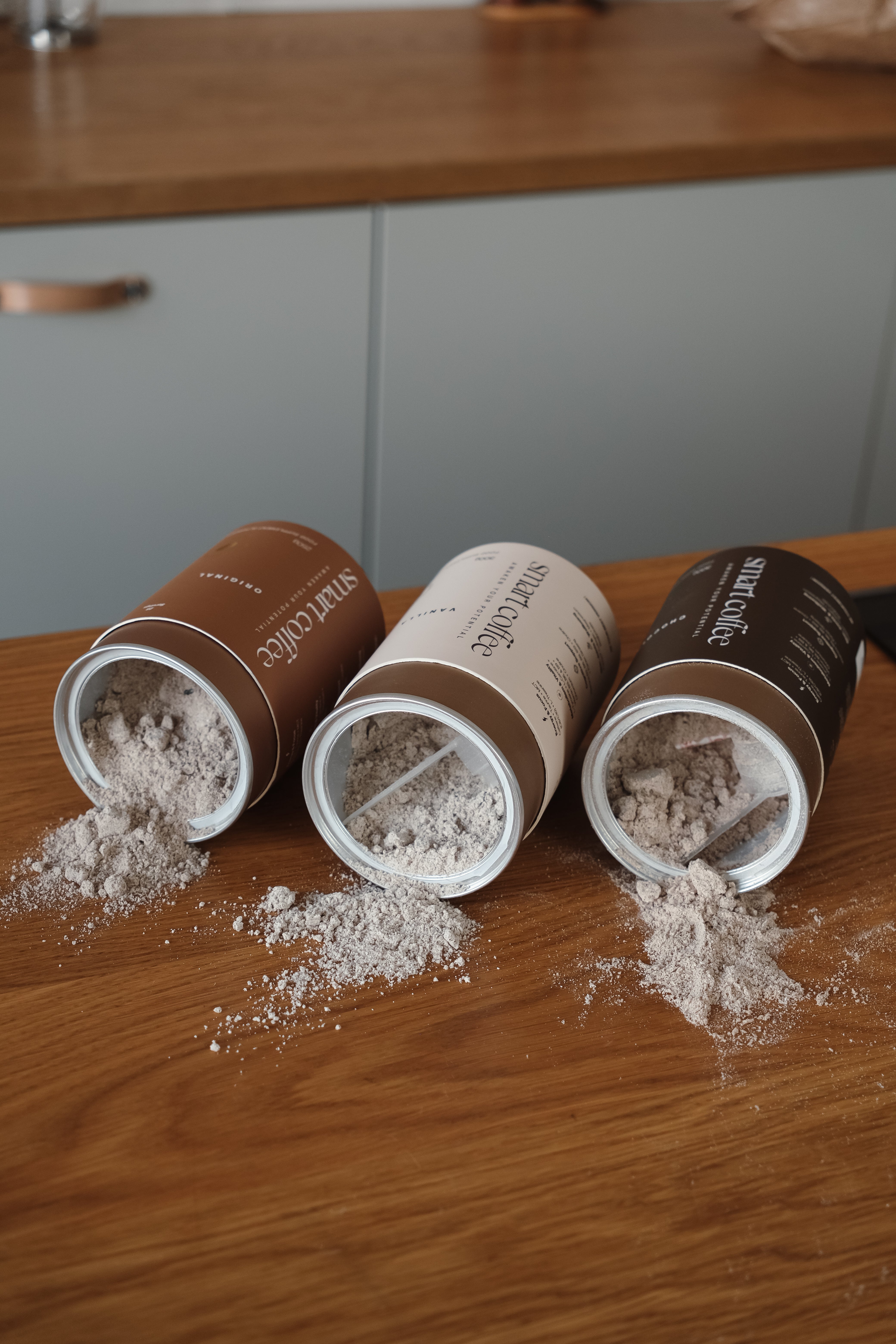
Yes — collagen in coffee can be genuinely beneficial, but only when it is in the right form and at a meaningful dose. Most products marketed as collagen coffee use native collagen protein, which the body cannot absorb intact through the intestinal wall. Hydrolyzed collagen — broken down into smaller peptide chains specifically to enable direct intestinal absorption — is the form that clinical research consistently associates with improvements in skin elasticity, joint comfort, gut barrier integrity, and connective tissue repair. Smart Coffee is not a collagen coffee — it is a complete functional coffee with 17+ bioavailable ingredients, of which hydrolyzed collagen is one. But understanding what makes collagen in coffee work, and what most collagen coffee products get wrong, explains exactly why formulation decisions matter more than ingredient names.
What collagen actually is — and why your body needs it daily
Collagen is the most abundant protein in the human body, making up approximately 30% of total protein content. It is the primary structural component of skin, tendons, ligaments, cartilage, bone, gut lining, and blood vessel walls — the connective tissue that holds everything together and maintains its integrity under physical and biochemical stress.
The body produces collagen continuously, but that production declines measurably from the mid-twenties and accelerates through the thirties and forties. Chronic stress accelerates this decline further by elevating cortisol, which directly degrades collagen synthesis. UV exposure, high sugar intake, and inflammatory dietary patterns all contribute to collagen degradation at rates that exceed the body's capacity to replace it.
The consequence of this progressive deficit extends beyond what is visible in skin and hair. Joint discomfort, slower recovery after physical activity, gut barrier permeability, and the structural integrity of blood vessel walls are all influenced by collagen availability — which is why collagen supplementation has moved from the beauty industry into sports nutrition, clinical practice, and functional food formulation.
Why coffee is a logical delivery format for collagen
Coffee and collagen are a nutritionally coherent pairing — not just a marketing convenience.
Vitamin C is a critical cofactor in collagen synthesis, required for the hydroxylation of proline and lysine residues that give collagen its structural integrity. Coffee consumed alongside a vitamin C source creates a favorable biochemical environment for collagen utilization. Coffee also provides chlorogenic acids — polyphenolic antioxidants that reduce the oxidative stress contributing to collagen degradation — meaning the same cup both delivers collagen and protects existing collagen from breakdown.
The thermal stability of hydrolyzed collagen peptides means that hot water does not degrade the ingredient. Hydrolyzed collagen peptides dissolve cleanly in hot liquid, do not significantly alter flavor, and reach the small intestine intact and available for absorption. The concern that hot coffee destroys collagen is common and straightforward to address — it applies to native collagen, not to the hydrolyzed peptide forms that effective products use.
The form question — why most collagen coffee products don't work as well as they claim
This is the detail that most collagen coffee marketing avoids — because addressing it honestly requires explaining why the cheaper ingredient doesn't perform the way the label implies.
Native collagen — the intact triple-helix protein molecule — has a molecular weight of approximately 300,000 daltons. The intestinal wall cannot transport molecules of this size into systemic circulation. When native collagen is digested, enzymes break it down into constituent amino acids — primarily glycine, proline, and hydroxyproline — which are absorbed individually and directed toward various metabolic purposes, not specifically toward collagen synthesis in target tissues.
Hydrolyzed collagen is collagen that has been pre-broken down through a controlled hydrolysis process into shorter peptide chains — typically with molecular weights between 2,000 and 5,000 daltons. These peptides cross the intestinal wall through peptide transporter pathways, enter systemic circulation, and reach target tissues — skin, joints, tendons, gut lining — as intact bioactive peptides. Research on hydrolyzed collagen consistently demonstrates benefits for skin elasticity, joint comfort, and connective tissue repair. Research on native collagen protein does not replicate these findings with the same consistency — because the absorption mechanism is categorically different.
When a product label says "collagen" without specifying "hydrolyzed" or "collagen peptides," there is a meaningful probability that the form present cannot produce the benefits the marketing implies.
What the research actually shows
The clinical evidence on hydrolyzed collagen supplementation has matured significantly.
Skin elasticity and hydration are the most studied outcomes. Multiple randomized controlled trials demonstrate that oral supplementation with hydrolyzed collagen peptides at doses between 2.5g and 10g per day for 8 to 12 weeks produces measurable improvements in skin elasticity, hydration, and reduction of fine lines. A 2019 systematic review published in the Journal of Drugs in Dermatology analyzed 11 studies involving 805 patients and found consistent evidence supporting hydrolyzed collagen's efficacy for skin aging parameters.
Joint health evidence is similarly consistent. Studies in athletes and individuals with joint discomfort show reductions in activity-related pain and improvements in joint function with hydrolyzed collagen supplementation at doses of 10g per day. The proposed mechanism involves stimulation of chondrocyte activity — the cells responsible for cartilage maintenance — through bioactive dipeptides including prolyl-hydroxyproline that are unique to hydrolyzed collagen and not produced from native protein digestion.
Gut barrier integrity is an emerging area with strong mechanistic rationale. Glycine — the most abundant amino acid in collagen — has documented roles in maintaining intestinal epithelial tight junctions that control gut barrier permeability. Hydrolyzed collagen peptides rich in glycine and proline have been investigated for gut barrier support particularly relevant in contexts of chronic stress and exercise-induced gut permeability.
How much collagen you actually need — and when
The dose question matters because presence on a label and presence at an effective dose are different things.
Research on skin outcomes consistently clusters around 2.5g to 5g of hydrolyzed collagen peptides per day for measurable effect, with 10g per day showing stronger effects in joint health studies. Products providing less than 2g are unlikely to produce meaningful outcomes regardless of marketing framing.
Timing relative to meals shows inconsistent results in research — absorption appears effective whether taken fasted or with food. The more important consideration is consistency: collagen's benefits accumulate over 8 to 12 weeks of daily supplementation rather than appearing acutely. A collagen source integrated into a daily ritual — like morning coffee — has a significant behavioral compliance advantage over a standalone supplement requiring a separate daily decision.
What to look for in any collagen coffee product
Hydrolyzed collagen peptides — not native collagen protein. The label should specify "hydrolyzed collagen," "collagen peptides," or a named tested form like Peptan®. If the label says simply "collagen" without specification, assume native collagen.
A meaningful dose per serving. Check the supplement facts for the actual grams of collagen per serving. Below 2g is likely insufficient for skin or joint benefits at that dose alone.
Transparency about the source. Bovine collagen — rich in types I and III — is relevant to skin, tendon, and gut applications. Marine collagen is higher in type I and preferred in some skin-specific research contexts.
No added sugars that would drive the glycation and oxidative stress that directly degrades collagen — counteracting the stated purpose.
Manufacturing standards and batch testing — quality control in the hydrolysis process matters for peptide profile consistency and efficacy.
How Smart Coffee approaches collagen — and why it goes further
Smart Coffee is not a collagen coffee. It is a complete functional coffee with 17+ bioavailable ingredients — of which hydrolyzed collagen is one critical component among many.
Each 12g serving of Smart Coffee delivers 3.5g of Peptan® hydrolyzed collagen peptides — within the dose range consistently associated with measurable skin benefits in clinical research, and a meaningful daily contribution toward the connective tissue and joint support that consistent collagen intake provides over time.
The choice of Peptan® specifically reflects the same formulation principle applied to every ingredient in Smart Coffee: not which form is cheapest to include, but which form research demonstrates to be effective. Peptan® has been the subject of multiple clinical trials, is manufactured to pharmaceutical-grade standards, and has a documented peptide profile that includes the bioactive dipeptides — prolyl-hydroxyproline and hydroxyprolyl-glycine — specifically associated with collagen synthesis stimulation in target tissues.
What makes Smart Coffee's collagen delivery different from a standalone collagen coffee is what surrounds it in the formula. L-theanine modulates the cortisol response that caffeine produces — because chronically elevated cortisol is one of the most significant drivers of collagen degradation, making cortisol management directly relevant to collagen outcomes. Magnesium bisglycinate supports the enzymatic environment in which collagen synthesis occurs at the cellular level. The complete methylated B-complex supports the cellular methylation processes that influence connective tissue repair.
These are not independent benefits stacked together. They are a formulation built around how these systems actually interact — which is what separates a functional coffee with collagen from a collagen coffee with caffeine.
One cup. Every morning. 3.5g of Peptan® hydrolyzed collagen — in the form that actually reaches your skin, joints, and connective tissue.
FAQ
Is collagen in coffee actually absorbed by the body? Yes — when it is in hydrolyzed form. Hydrolyzed collagen peptides are broken down into chains small enough to be transported across the intestinal wall through peptide transporter pathways. Native collagen protein is too large to be absorbed intact and must be broken down to individual amino acids by digestion, which does not produce the bioactive peptides associated with skin and joint benefits. Always verify whether a collagen coffee specifies hydrolyzed collagen or collagen peptides before purchasing.
How long does it take for collagen coffee to show results? Clinical research on hydrolyzed collagen consistently shows measurable outcomes in skin elasticity after 8 to 12 weeks of daily supplementation at adequate doses. Benefits are cumulative rather than acute — which is precisely why integrating collagen into a daily ritual like coffee, rather than a standalone supplement, significantly improves the consistency that drives results.
Does hot coffee destroy collagen peptides? No. Hydrolyzed collagen peptides are thermally stable at normal coffee drinking temperatures. The hydrolysis process that makes collagen absorbable also produces peptides that are structurally stable in hot liquid — they dissolve cleanly and reach the intestine intact.
How much collagen does Smart Coffee contain per serving? Each 12g serving of Smart Coffee delivers 3.5g of Peptan® hydrolyzed collagen peptides — within the dose range that clinical research associates with measurable improvements in skin elasticity and hydration. For joint-specific outcomes, where research typically uses 10g per day, Smart Coffee's collagen works most effectively as part of a broader collagen-rich dietary foundation.
Is collagen coffee good for joints? Yes, when it contains hydrolyzed collagen peptides at a meaningful dose. Studies demonstrate reductions in activity-related joint pain and improvements in joint function with consistent hydrolyzed collagen supplementation. The mechanism involves bioactive dipeptides — particularly prolyl-hydroxyproline — that stimulate chondrocyte activity and support cartilage maintenance. These dipeptides are unique to hydrolyzed collagen and are not produced from the digestion of native collagen protein.
What is the difference between collagen coffee and Smart Coffee? Collagen coffee typically refers to a product whose primary functional claim is the addition of collagen to coffee. Smart Coffee is a complete functional coffee formulated with 17+ bioavailable ingredients — including 3.5g of Peptan® hydrolyzed collagen per serving — alongside L-theanine, magnesium bisglycinate, methylated B-complex, MCT oil, chromium, choline, and Panax ginseng. The collagen in Smart Coffee is one component of a formula designed around how these systems interact, not a single-ingredient addition to a standard coffee base.
Can Smart Coffee replace a standalone collagen supplement? It can contribute meaningfully to daily collagen intake, with 3.5g of Peptan® hydrolyzed collagen per serving integrated into a ritual most people already maintain without fail. For individuals whose primary goal is collagen at higher therapeutic doses — particularly for joint applications where research uses 10g per day — Smart Coffee's collagen dose works best as a consistent daily foundation alongside other dietary collagen sources.


Share: